Just Eat Takeaway
thuisbezorgd.nl/just-eat.co.uk
Joining Just Eat Takeaway during COVID felt a bit surreal. The world was shut down, and we were building software for an industry that had never been busier. Restaurants that had barely touched delivery before were suddenly depending on it to survive.
I worked in the restaurant vertical, on a product called T-Connect. A terminal device that lived in the kitchen, showing incoming orders, letting staff communicate with customers, and printing receipts. The kind of thing you never notice when it works, and everyone notices when it doesn't. During a Friday night dinner rush, chefs don't have time to figure out a confusing interface. Everything had to be immediate and obvious.
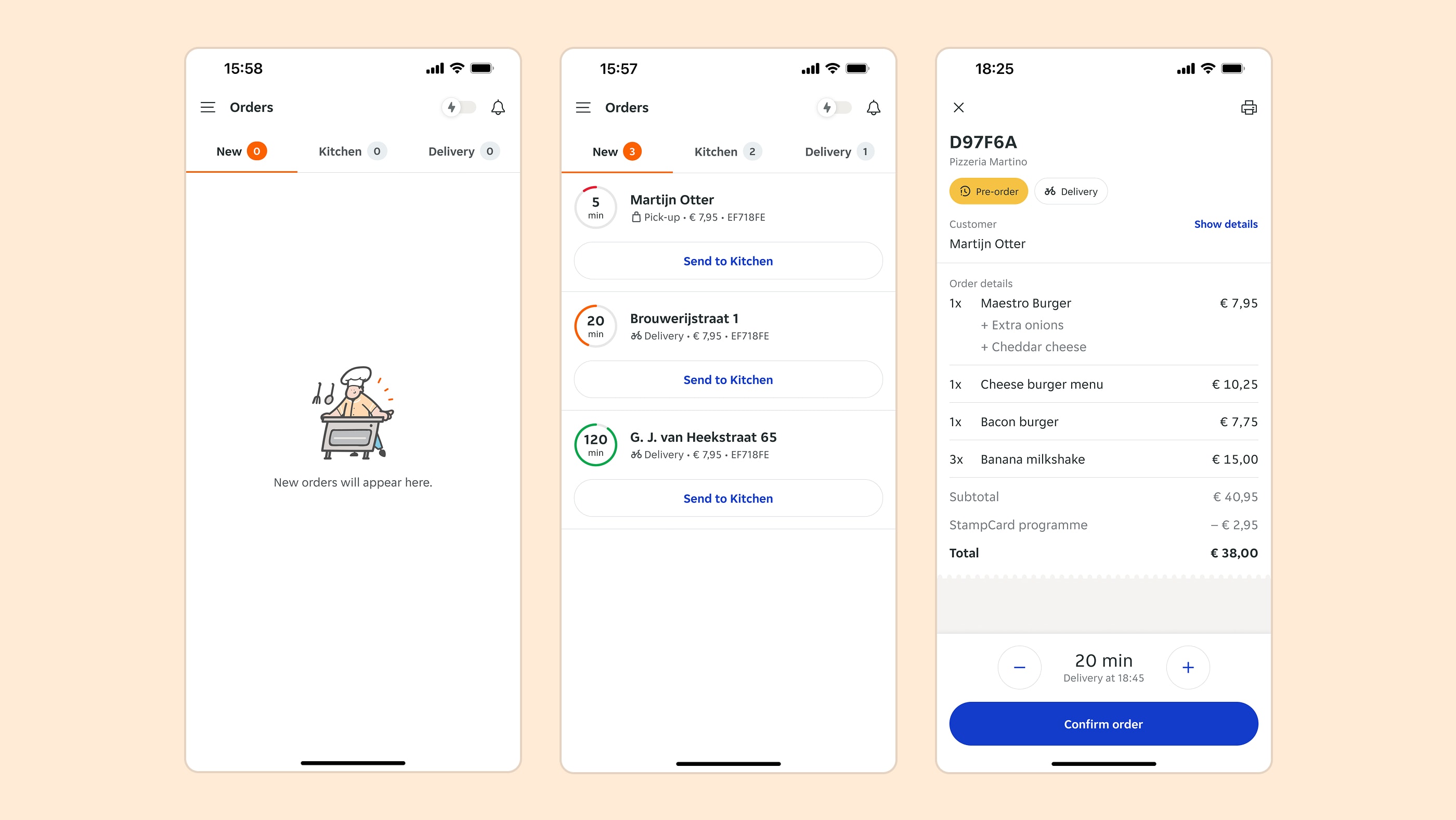
I was the sole designer on T-Connect, working with a team of around 12 engineers. One of the things I hadn't really dealt with before at this scale was designing for multiple countries and languages simultaneously. You'd get the layout right across language after language, and then one would completely break everything. A German word that's three times longer than its English equivalent. A right-to-left language that flips your entire layout. It teaches you quickly that your design is never as done as you think it is.
Going out for dinner and hearing that exact notification sound from the kitchen, the same one I'd heard hundreds of times during testing, never got old.
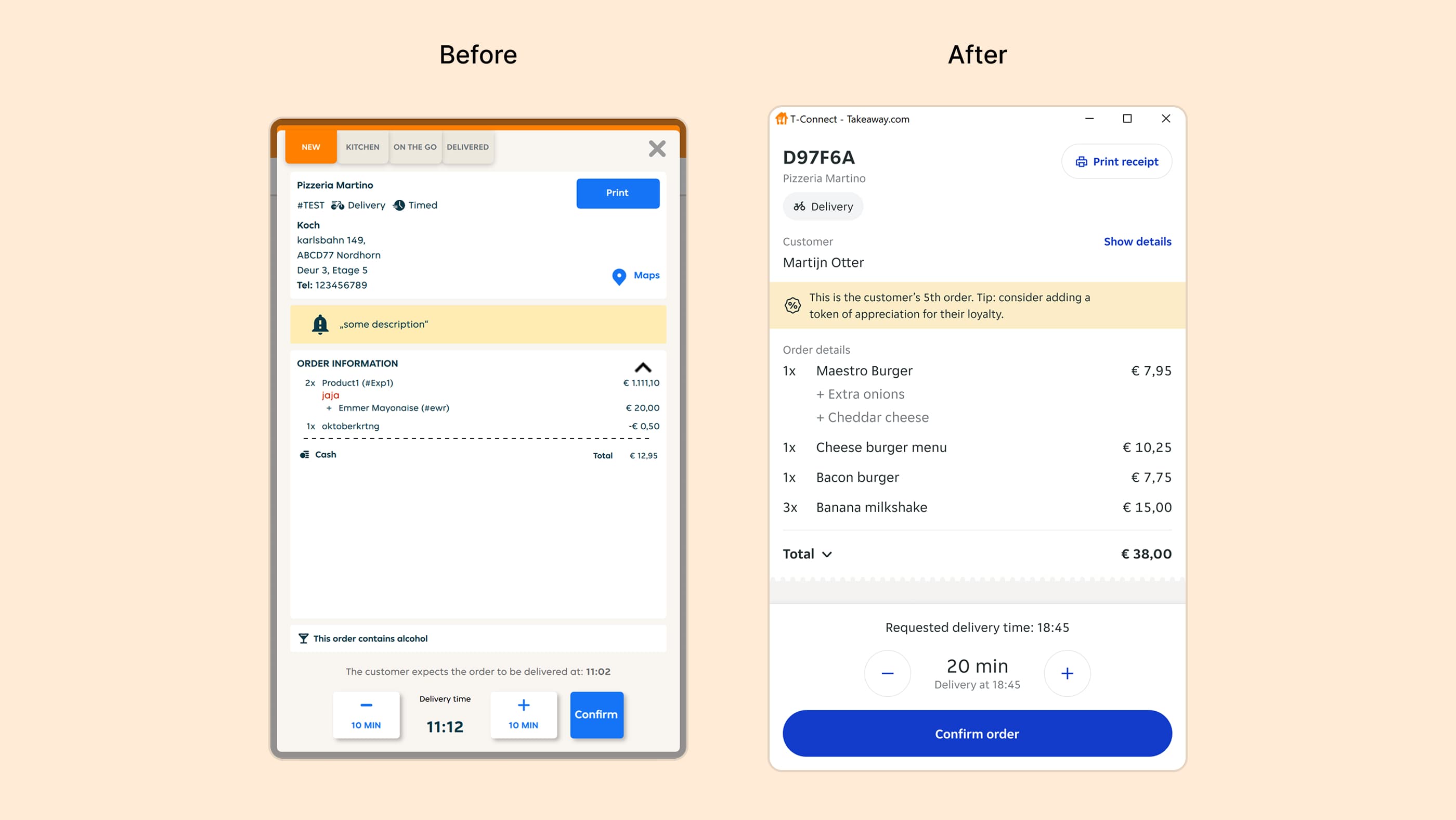
The order status problem nobody was talking about
T-Connect had a simple set of order statuses: New, In Kitchen, On the Way, Delivered. Straightforward enough. Restaurants would accept an incoming order, move it to In Kitchen when they started preparing, mark it On the Way when the driver left, and Delivered when it arrived. These status updates fed directly into the consumer app, which used them to give customers an estimated delivery time.
The number one complaint in the app store reviews? Food never arrives on time. Often too early. You're barely out of the shower and someone's at the door.
I decided to dig into the data to see if there was a pattern. There was. A significant percentage of orders were never moved out of New at all. They just sat there the entire evening, and right before closing time the list got cleared out. No status updates meant no delivery estimates, which meant customers had no idea when to expect anything. The delivery was always a surprise, and more often than not, not a welcome one.
To understand why, I reached out to newer restaurant customers who had just started using T-Connect. What I heard stopped me in my tracks: they had no idea what they were supposed to do with incoming orders. One restaurant owner thought his terminal wasn't even working, because when there were no orders, the screen was completely empty. No explanation, no guidance, nothing.
The fix sounds almost embarrassingly simple in hindsight. I designed an empty state that actually explained what the terminal was for and what to do when an order came in. A short explanation, a small illustration, clear instructions for each status. That's it.
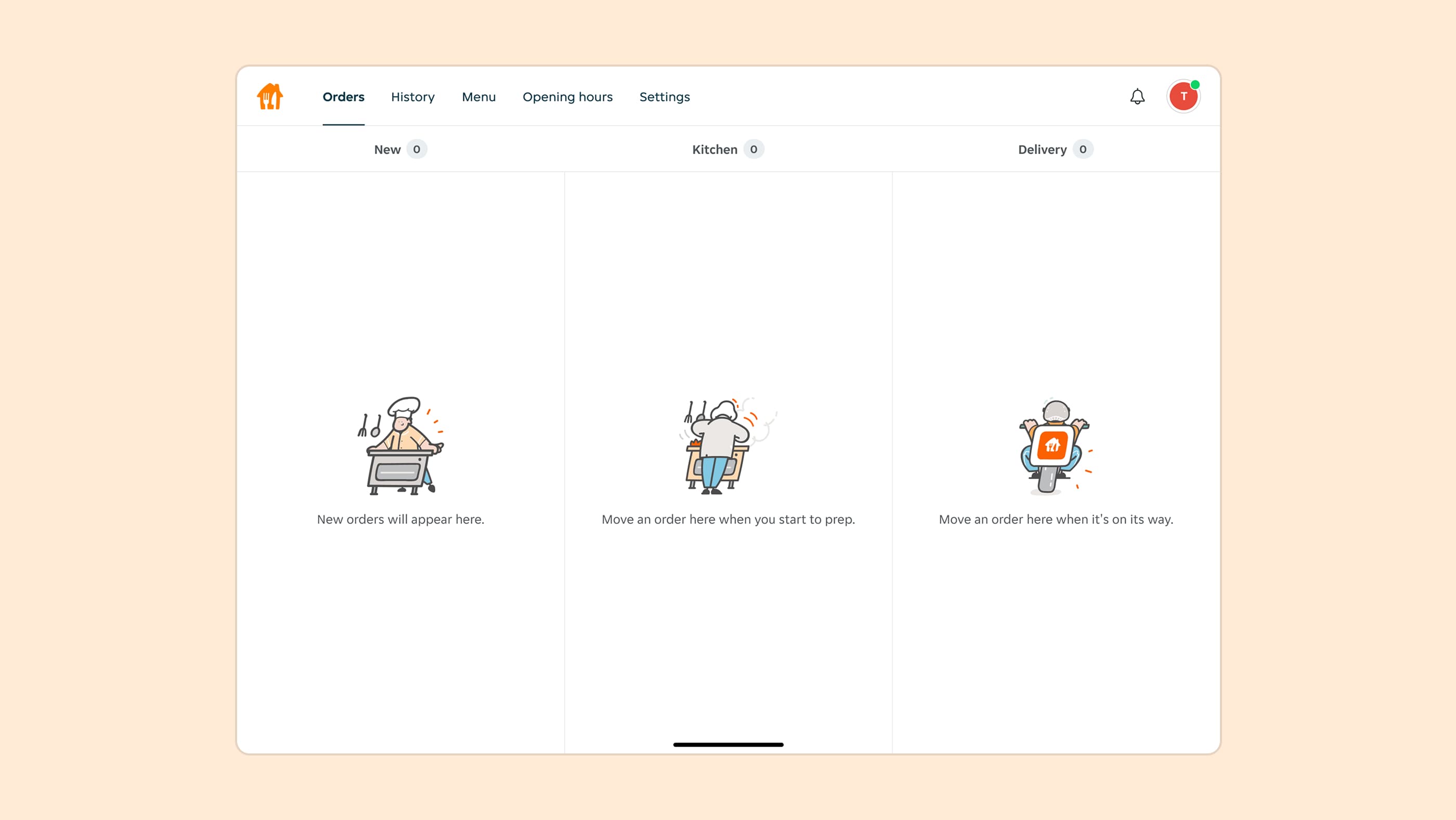
After the release we saw an immediate spike in orders being moved through the statuses. Some specific restaurants went from moving 0% of their orders to over 80% overnight. Customers finally started getting accurate updates. The number one complaint in the reviews suddenly had a real answer, and it came from an empty screen that had been sitting there the whole time.