Felyx
When I joined Felyx, the moped sharing war was right on. You'd see mopeds everywhere on the street. Or in canals. The sector had a bumpy ride, it really was a battle to be in as many cities as possible before a competitor got there first.
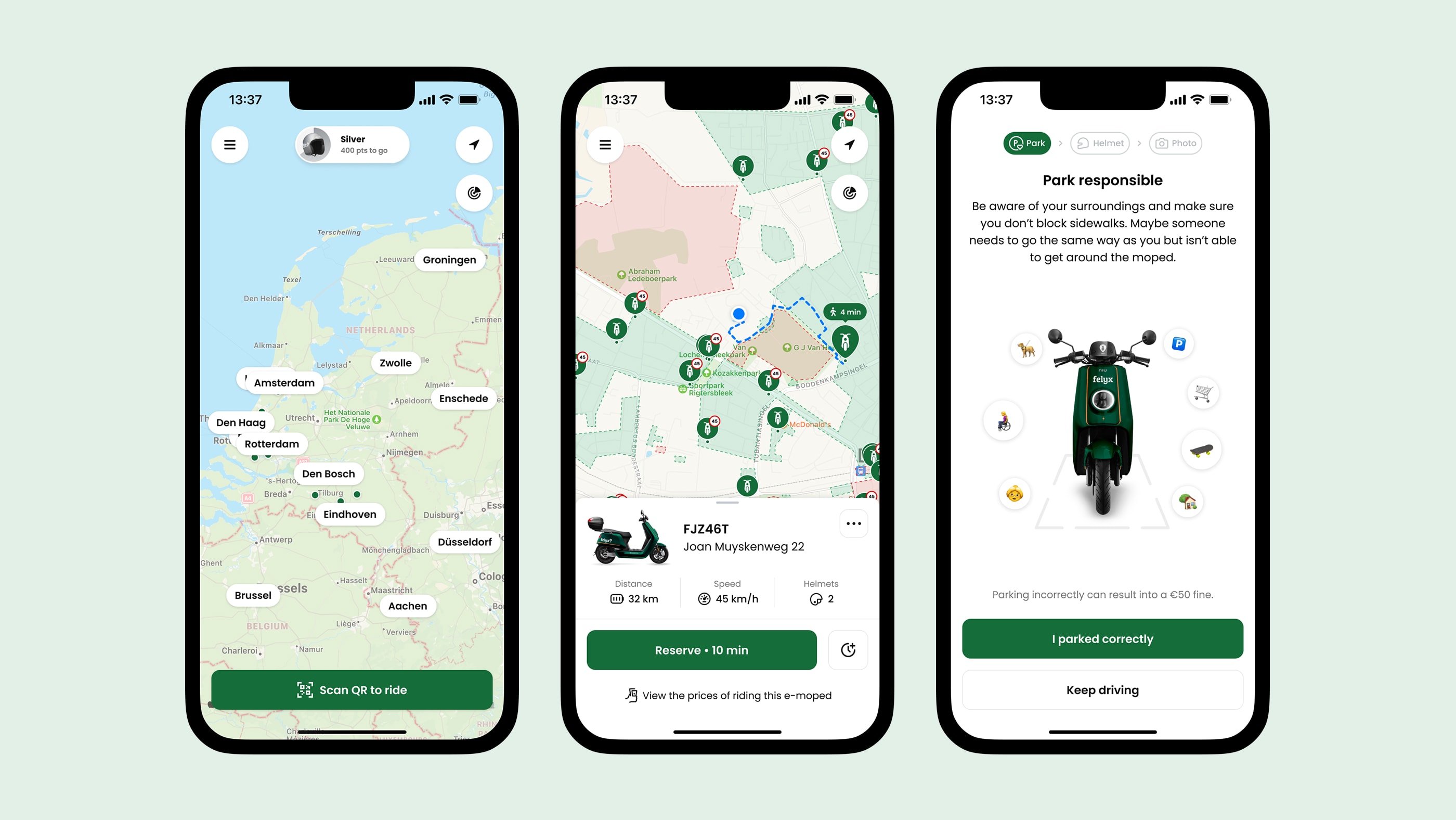
I was solely responsible for all design in the app. Everything a rider touched, from finding a scooter to ending the ride and parking properly. A constant puzzle around safety and local regulations. Oh, and riding a moped through the city in the sun was research. It was, really.
Felyx launched in my hometown while I was working there, which meant I was constantly spotting our mopeds on the street, watching how people interacted with them, and occasionally getting annoyed by what I saw.
The moped that wouldn't move
One moped kept standing in front of my local supermarket. Just sitting there, day after day, in everyone's way. Anyone who's lived in a city with shared mopeds knows exactly how they end up parked: sideways on a corner, blocking a doorway, dumped wherever was most convenient for the last rider. Not a lot you can do about it besides fining people, and even that only goes so far.
One day I opened the app to rent it and move it somewhere better. Yes, I occasionally did that. Not wanting the company to get a bad reputation felt like a reasonable excuse. That's when I noticed why it had been standing there so long: low battery.
We had a threshold for battery swaps. Below a certain percentage, a swap would be triggered. Above it, the moped just stayed on the street. The rental business runs on tight margins and battery swaps are expensive, so the threshold was set conservatively. Fair enough. But what I couldn't stop thinking about was how we were displaying that battery information in the app.
Low battery showed up in red. With a percentage.
Red means danger. That's not a design opinion, that's just how people read color. And a percentage is meaningless without context. If I told you your phone was at 10% on a long train ride, you'd panic. But what does 10% of a moped battery actually mean? In our case, it meant roughly 12 kilometers of range remaining. If your ride is 4 kilometers, that 10% represents 300% of the range you actually need. That's not a low battery. That's plenty. You'd just never know it from a red "10%".
I went to our data analyst to check whether this was actually affecting rental behavior. It was. Mopeds below a certain battery percentage were being rented significantly less often, even when there were no alternatives nearby. And because they weren't getting rented, they also weren't dropping below the swap threshold. They just sat there. Invisible to anyone who saw that red number and moved on.
The fix was two small changes. I removed the red color and switched to black, with different icons to indicate battery level: full, half, low. No alarm, just information. And I replaced the percentage with an estimated range in kilometers. Because 10% means nothing, but "12 km remaining" means everything.
After the changes we saw a clear shift in low-battery mopeds getting rented more. That moped in front of my supermarket? Gone.
Two small tweaks. No redesign, no new feature. Just paying attention to what the data was telling me, and then asking why.